
AI, Automation & Software
4 min read
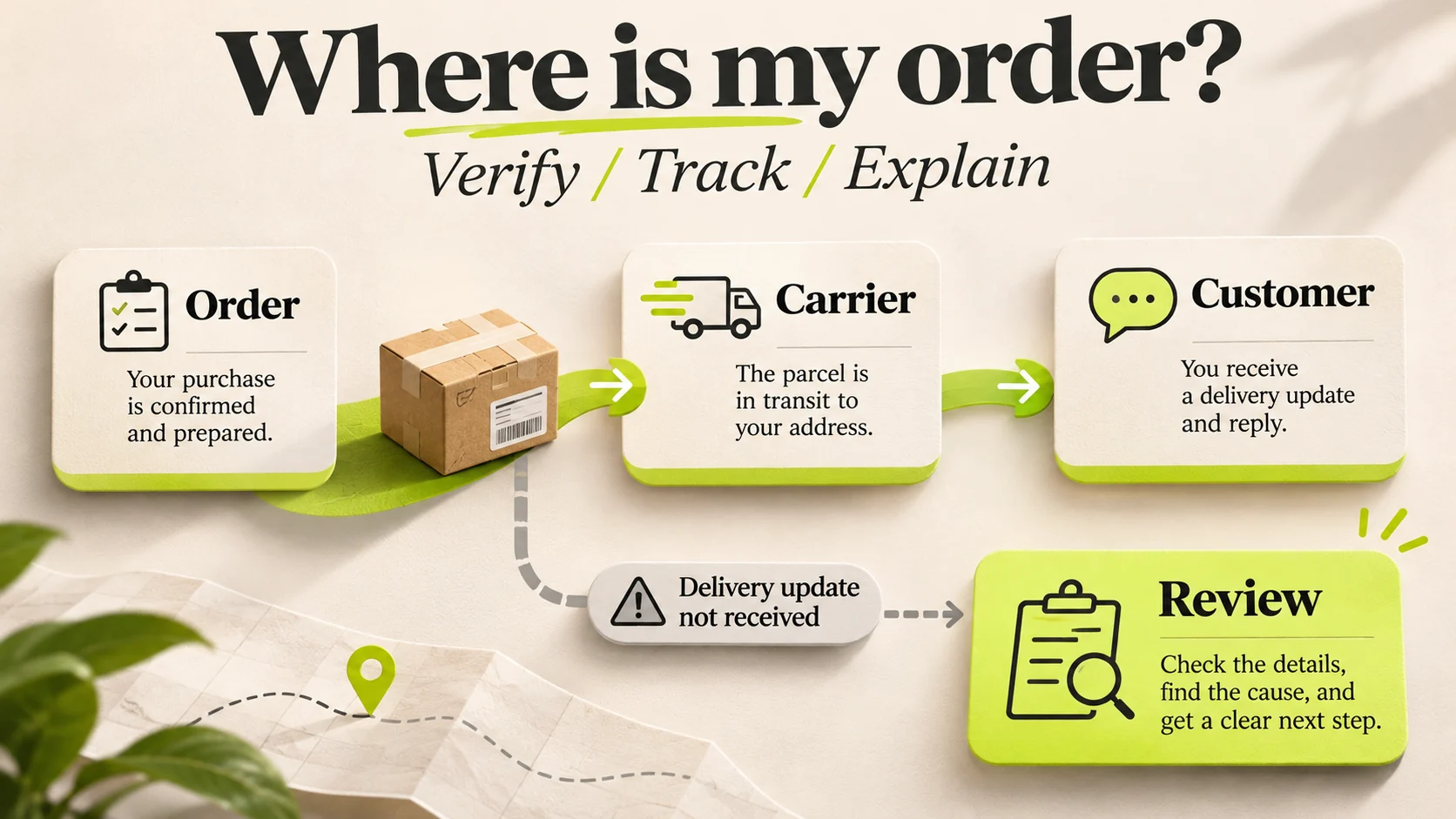
Order-status automation works when it connects a customer's question to the latest trustworthy fulfilment and delivery information. AI can explain that information in plain language. It should not guess where a parcel is or promise an arrival time that no source supports.
Map the journey from order acceptance to delivery before drafting responses. “Paid”, “being prepared”, “shipped” and “delivered” describe different events. A label printed in a warehouse is not proof that a carrier has collected the parcel.
Identify the sources of truth
The commerce platform may hold the order and fulfilment record while a carrier holds transit events. Decide which source answers each question and record its last update time. Shopify's webhook guidance is a useful reminder that event delivery and ordering cannot be assumed perfect; reconciliation remains necessary.
Preserve tracking references per shipment. A single order can have multiple parcels, locations and carriers. Collapsing them into one status creates misleading answers when only part of the order has moved.
Build the response from evidence
- Verify the customer's access to the requested order.
- Retrieve the order and relevant shipment records.
- Check the freshness and consistency of carrier events.
- Explain confirmed events in customer-friendly language.
- Flag uncertainty and provide the appropriate next step.
Keep estimated dates clearly labelled as estimates from their source. If a carrier has no recent event, say that the update is unavailable and route the case according to the merchant's procedure. A fluent answer is not a substitute for a fresh event.
Example: one order, two parcels
Illustrative scenario: a customer orders shoes and a jacket. The shoes are delivered, while the jacket is still awaiting collection from a second warehouse. The answer should describe each shipment separately. Reporting “your order is delivered” would obscure the unresolved item.
If the customer disputes the delivery scan, preserve the dispute as a new service action. A carrier's delivered event is evidence to investigate, not a reason to close the complaint automatically.
Make proactive messages a separate decision
Answering a customer who asks for an update and sending unsolicited status messages are different workflows. Check channel permissions, preferences and template requirements before adding outbound notifications. Keep messages tied to useful events rather than repeating every internal state change.
Prevent duplicates when the same event arrives more than once. If a delivery date changes, explain the new evidence without erasing the previous communication history. Staff need that history when a customer asks why the earlier estimate was different.
Test the difficult cases
Include missing tracking numbers, returned parcels, cancelled labels, stale events, split shipments and carrier downtime. Test access denial for a different customer's order. Confirm that refunds and replacement shipments require their own approval process.
Measure answer accuracy, repeat contacts and time to resolve exceptions. A lower ticket count can be useful, but only if customers can still reach a person when the status does not explain their problem.
Common questions
Can AI predict delivery when tracking is missing?
It should not invent a promise. Use a documented estimate where available and make uncertainty explicit.
Do we need AI for every update?
No. Structured status messages can handle straightforward events; AI is more useful for interpreting the question and explaining mixed states.
What should the first version support?
One reliable order source, a defined carrier integration and a clear route for exceptions are a better start than broad but unreliable coverage.
Sources and further reading
Continue with business integration strategy, support escalation design.
Discuss your workflow
HINTX helps businesses connect practical operating needs with AI automation and software engineering. Explore our related service, or describe your current process and the problem you want to solve. A useful first discussion starts with your systems, constraints and intended outcome.
Research checked 24 November 2026. Examples are illustrative unless explicitly identified otherwise. Product capabilities and terms can change. The cover is an AI-generated editorial illustration, not a client screenshot or measured result.



Login to comment
To post a comment, you must be logged in. Please login. Login
Comments (0)