
AI, Automation & Software
4 min read
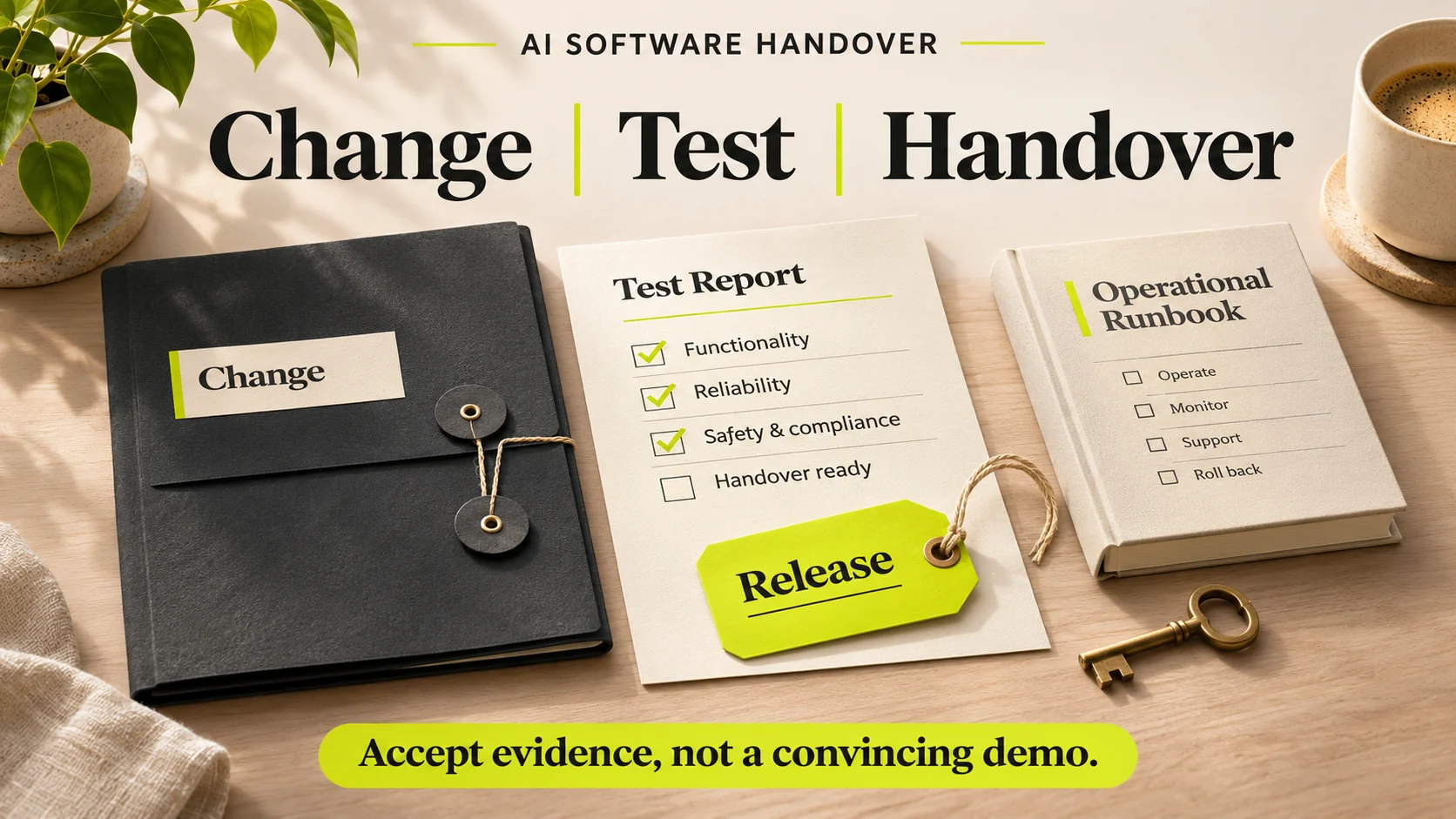
Accept AI-assisted software on the same basis as other business software: it must meet the agreed requirement, protect access, preserve data and remain operable after handover. The speed of producing code does not remove the need to prove those things.
A demonstration shows a path through the product. An acceptance pack explains which paths were tested, which limitations remain and who can recover the system when something goes wrong.
Why code-review evidence deserves attention
GitHub introduced ReviewBench on 5 October 2026 as an open benchmark for AI code review. Its focus on evaluating review behaviour is a useful reminder that generating code and identifying meaningful defects are different tasks.
A benchmark result does not certify an individual application. Business acceptance still needs evidence from the actual code, configuration and workflows being delivered.
Translate the brief into observable outcomes
Replace “build an intelligent customer portal” with concrete acceptance cases. Which user can see which record? What must happen when a request is incomplete? Which existing information must survive an update? How does a person know whether a submitted operation succeeded?
Keep the agreed examples with the project. When a developer or coding agent changes the implementation, the team can rerun the same cases. Screenshots are useful for presentation, but they cannot prove access control or data preservation.
| Delivery evidence | What to inspect | Warning sign |
|---|---|---|
| Requirements | Examples tied to business outcomes | Only a feature list |
| Tests | Normal, denied and failure cases | Only the happy-path demo |
| Data changes | Explicit affected records and recovery | Unexplained whole-database replacement |
| Dependencies | Purpose, versions and licence review | Packages nobody can explain |
| Operations | Deployment, monitoring and rollback owner | Only the original developer can run it |
Review permissions before polish
Ask for a demonstration with two different accounts and an unauthenticated visitor. Test direct requests to protected routes, not just whether a button is hidden. Check that one customer cannot retrieve another customer's information by changing an identifier.
Review uploads, exports and administrative actions separately. A polished interface can sit in front of overly broad endpoints. The application should validate input and enforce authority on the server regardless of how its code was written.
Make data preservation part of acceptance
Identify existing users, enquiries, content and configuration that must remain unchanged. Before release, capture a verified backup and define narrowly scoped changes. After release, compare the affected records and protected areas against the expected result.
A recovery plan should explain when it is safe to reverse a change and how later legitimate edits will be preserved. “Restore the old database” is not an adequate routine rollback plan for a live system receiving new work.
Example: a booking portal built with coding assistance
Illustrative scenario: a supplier demonstrates a new booking screen successfully. The acceptance review also tests simultaneous requests, an expired session, a duplicate submission and a booking changed by staff during checkout. Those cases reveal whether the portal is ready for ordinary operational conditions.
The team records what is supported and what remains manual. The buyer receives the source repository, setup instructions, configuration requirements and recovery procedure. None of that depends on pretending AI was not used; it depends on accountable engineering.
Inspect the handover, not just the repository
A repository should contain the source and appropriate documentation, while credentials remain in the approved secret store. The operator needs to know how to build and deploy, which services are required, where errors are observed and how to rotate access.
Ask another authorised developer to follow the instructions in a safe environment. Missing assumptions often become visible when someone other than the original author tries to operate the system. Record known limitations instead of hiding them in a chat history.
What to ask your supplier
- Which acceptance cases prove the important business rules?
- What security and dependency checks were actually run?
- Which existing records will change during release?
- What does a failed deployment leave behind?
- Who owns support, access and recovery after handover?
- Which AI-generated suggestions were independently reviewed?
Frequently asked questions
Should we reject software because AI helped write it?
No. Assess the delivered system and evidence. The concern is unverified behaviour, unclear ownership or missing review, not the presence of an assisted tool.
Are passing tests enough?
They support acceptance within their coverage. Review whether the cases represent the business, and combine them with permission checks, deployment evidence and human judgement.
Can a prototype be used immediately in production?
Only after its limitations and operating requirements have been assessed. A prototype may deliberately omit controls that a live service needs.
Commission a result you can operate
HINTX's software engineering service combines implementation with practical release and handover work. Use our build, buy or integrate guide for the earlier product decision, or discuss the acceptance evidence your project needs.
Research checked 20 November 2026. Product availability can change. The cover is an AI-generated editorial illustration, not a client screenshot or performance result.



Login to comment
To post a comment, you must be logged in. Please login. Login
Comments (0)