
AI, Automation & Software
5 min read
A customer asks for a waterproof jacket in the right size and price range. An assistant can answer fluently and still recommend an unavailable item. The useful work happens underneath the conversation: finding the correct product, checking its variant and explaining what the customer can actually buy.
Shopify's 28 October developer announcement describes structured connections between assistants, catalogues and checkout, including buyer-approved actions. It is a concrete reason for retailers to review their product and ordering data. It does not mean every store already supports every assistant or that installing a chat box will produce more sales. Source.
Start with the catalogue
Choose a small product group and inspect the records staff rely on. Are sizes consistent? Are materials and compatibility details recorded in fields, or scattered across promotional descriptions? Can the system identify the exact variant rather than just a product family?
In a fictional outdoor shop, “waterproof” and “water resistant” should not be treated as interchangeable. If the supplier has not provided a rating, the assistant should say the information is unavailable. It should not turn a likely answer into a product specification.
Keep the original source and update time with important facts. An assistant needs a way to distinguish a current stock response from an old catalogue export. Staff also need an owner for correcting inaccurate records.
Separate advice from actions
Searching and comparing products are different permissions from changing a basket or completing a purchase. Define the information shown before each action. A basket change should identify the variant, quantity and price the customer is accepting.
Let the store's existing rules validate stock, delivery and eligibility. Do not reproduce those rules in a long prompt and hope they remain aligned. If the checkout rejects an action, explain the rejection and offer the supported next step. The assistant must not claim an order exists because it attempted a request.
Test the awkward conversations
Try a discontinued product, conflicting size advice, an unavailable colour and a customer who changes their mind halfway through. Test a slow inventory response and a repeated button press. Check whether the assistant keeps the correct product selected when the conversation moves between alternatives.
Treat these as acceptance cases, with expected behaviour recorded before release. Measure whether people reach an appropriate product, how often staff correct information and where shoppers abandon the journey. A long conversation is not automatically a successful one.
Make the first version useful
A sensible pilot might answer questions for one product group and prepare a basket for confirmation. That is easier to assess than promising an autonomous shopping journey across the entire store. Keep normal browsing and checkout available throughout.
Read our business-system integration guide for the connections behind the interface. HINTX software development can help define the product data, permitted actions and failure handling.
A practical catalogue readiness check
Use a small selection of products that represents the difficult cases, not only the best-maintained items. For the fictional outdoor shop, include a jacket with several sizes, an item with missing material information, a discontinued line and a product that is available only at one location. Record the expected answer before testing the assistant.
| Check | What the assistant needs | What to do if it is missing |
|---|---|---|
| Product identity | A stable product and variant reference | Ask for clarification instead of selecting a similar name |
| Availability | A current response for the selected variant and fulfilment location | Explain that stock could not be confirmed |
| Price | The store's applicable price and currency | Return to the supported product or checkout page |
| Product claims | Recorded specifications with a source | Keep the claim unknown; do not infer it from a photograph |
| Purchase | A confirmed basket and the store's normal checkout validation | Keep the customer in control and explain the next step |
Walk through one failed purchase attempt
Suppose the shopper chooses a medium jacket, then changes to large. The assistant should retain the large variant's identifier, request its current availability and show the revised choice. If the inventory service times out, a previously available medium jacket does not establish that the large one is in stock. The interface should pause that action and offer a normal product-page route.
If the customer retries after an uncertain checkout response, first establish whether an order already exists through the platform's supported mechanism. Do not use a reassuring conversational answer as evidence that payment or order creation succeeded. This example describes a proposed acceptance test, not a delivered HINTX checkout or a claim about every ecommerce provider.
Choose a useful first scope
Agree one catalogue area, a named data owner, permitted actions and an escalation route. Compare the assistant with ordinary search using the same product questions. Review wrong-variant suggestions, unsupported claims, requests needing staff help and completed journeys alongside any conversion measurement. Keep session and attribution limitations visible; an attractive demonstration cannot establish incremental sales.
Before commissioning the pilot, prepare a short brief: the customer question, the systems holding product facts, the changes the assistant may make and the evidence needed to accept the work. Our voice AI guide covers conversation and confirmation; this article covers the store data and transaction controls underneath them.
Common questions
Do we need to replace our ecommerce platform? No conclusion follows from the news alone. Check the platform's supported interfaces and your actual data first.
Will this increase conversion? That requires a measured pilot. Availability, usefulness and completed purchases matter more than a polished demonstration.
Discuss your shopping workflow with HINTX. Bring a product group, the questions customers ask and the systems that hold the answers.
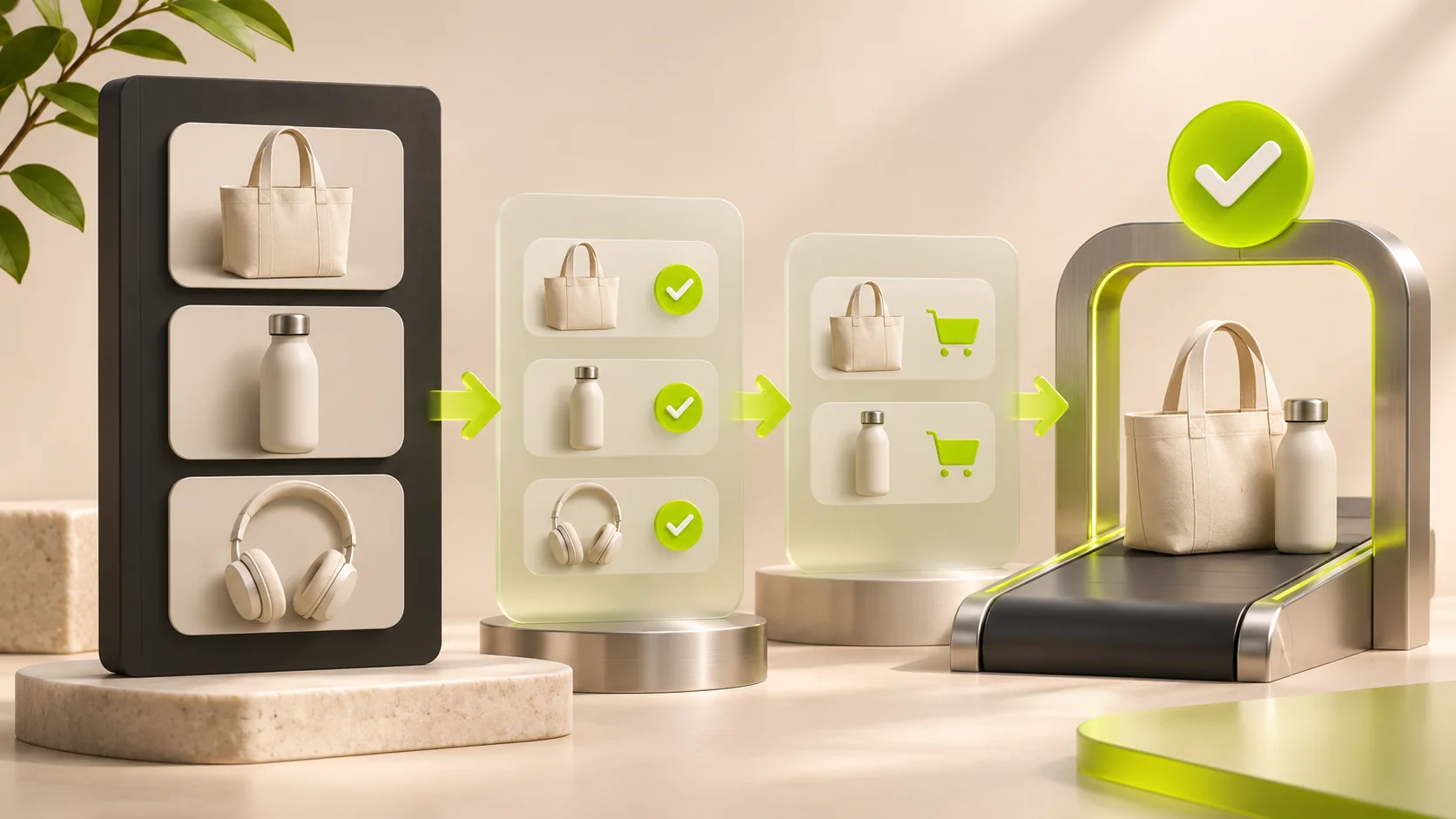
Cover image: original AI-generated editorial illustration. It does not depict a client system or measured business results.



Login to comment
To post a comment, you must be logged in. Please login. Login
Comments (0)