
Business Strategy
4 min read
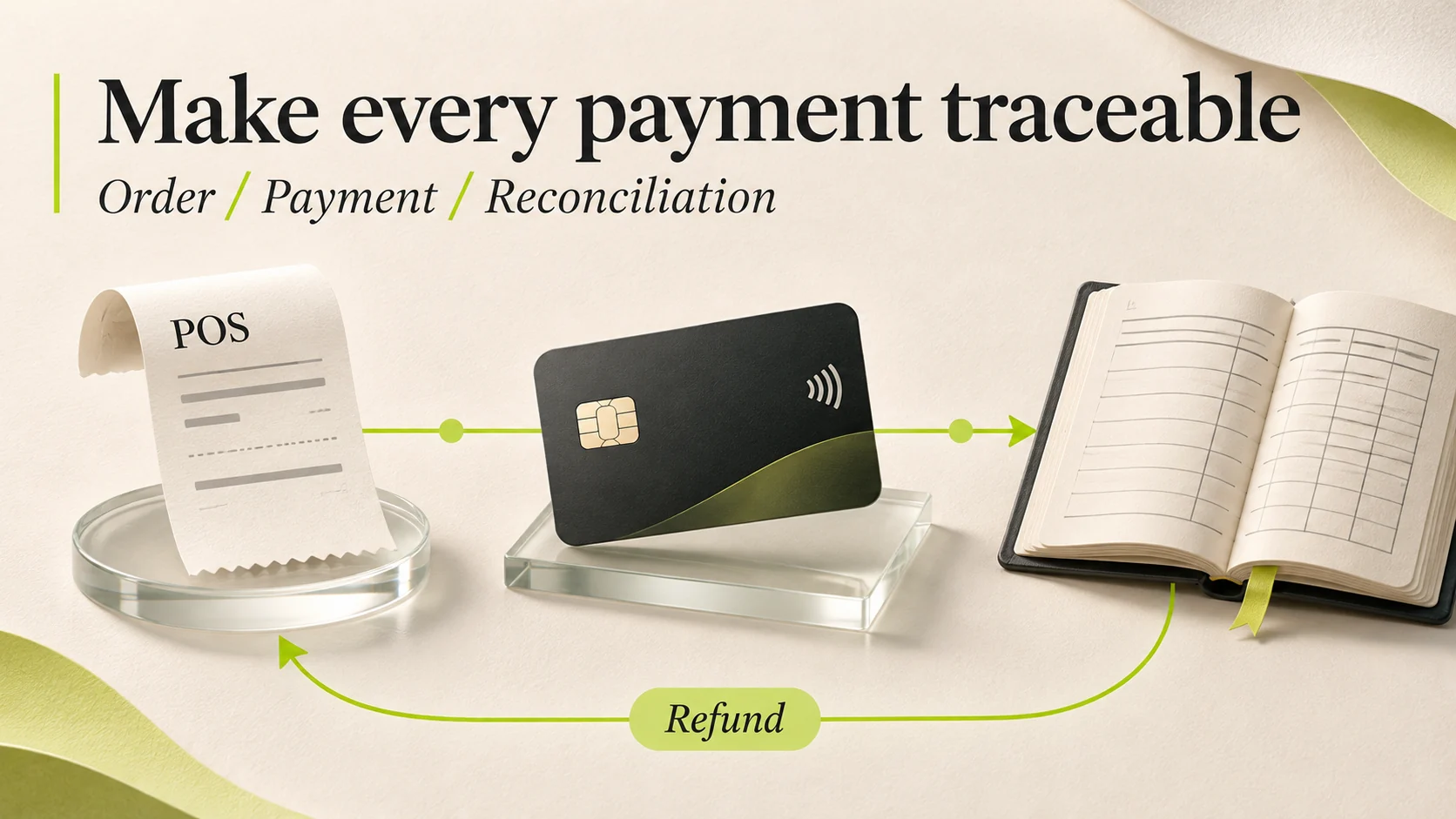
A POS and accounting integration should make money movement explainable. An order total, a payment, a processor settlement and a bank deposit are related records, but they are not interchangeable. Copying the daily sales total into accounting can hide fees, refunds and timing differences.
Begin with a mapping approved by the person responsible for the books. This article describes integration design, not a substitute for accounting advice. The correct posting and tax treatment depend on the business and its jurisdiction.
Map the transaction lifecycle
Document how orders, discounts, payments, cancellations, refunds, tips and fees appear in each system. Record the identifiers that connect them. A refund should remain linked to its original transaction even when it occurs on a later day.
Xero's API distinguishes accounting documents and payment operations, including payments against invoices and refunds against credit notes. An integration must follow the target system's supported model rather than treating every negative amount as an ordinary sale.
Separate sales from settlements
Define the business timezone and reporting cutoff. A processor may settle several days of transactions together or deduct fees before paying the bank. Reconciliation should explain those differences rather than force totals to match by changing source transactions.
- Match POS payment references to processor transactions.
- Associate refunds and reversals with their originals.
- Record settlement batches and fees separately.
- Compare the expected deposit with the bank record.
- Send unresolved differences to an accountable reviewer.
Example: a refund after settlement
Illustrative scenario: a restaurant takes payment on Monday, receives settlement on Wednesday and refunds part of the order on Friday. The Friday refund should not erase Monday's sale history. The accounting flow should preserve the original transaction and the subsequent adjustment under the agreed posting rules.
If the refund request times out, check its recorded outcome before resubmitting. A repeated integration job must not issue a second refund or post the same adjustment twice.
Use AI for investigation, not balancing entries
AI can summarise a reconciliation exception and suggest which records an operator should inspect. It should not invent a journal entry to make the totals agree. Keep calculations, posting rules and authorisation enforced by deterministic services and the accounting platform.
Show the source records behind every explanation. A reviewer needs the transaction, settlement and adjustment references, not just a confident paragraph saying the discrepancy is a fee.
Test operational edge cases
Include split payments, partial refunds, duplicate webhooks, cancelled orders, offline POS activity and a settlement spanning the reporting cutoff. Test rejected accounting entries and expired credentials. Confirm that operators can retry a failed transfer without duplicating successful entries.
Keep a report of transferred, rejected and pending records. “Sync completed” should describe a verifiable result, not merely a job that finished running. Agree how exceptions are resolved before the business relies on unattended posting.
Common questions
Can we reconcile only daily totals?
That may support some reporting needs, but retain enough transaction detail to investigate refunds, fees and discrepancies.
Does an integration replace the accountant?
No. It implements agreed mappings and exposes exceptions; accounting policy and review remain business responsibilities.
Should AI automatically fix mismatches?
It can assist investigation. Financial changes require supported rules, evidence and the appropriate approval.
Sources and further reading
Continue with restaurant platform architecture, business API strategy.
Discuss your workflow
HINTX helps businesses connect practical operating needs with AI automation and software engineering. Explore our related service, or describe your current process and the problem you want to solve. A useful first discussion starts with your systems, constraints and intended outcome.
Research checked 24 November 2026. Examples are illustrative unless explicitly identified otherwise. Product capabilities and terms can change. The cover is an AI-generated editorial illustration, not a client screenshot or measured result.



Login to comment
To post a comment, you must be logged in. Please login. Login
Comments (0)