
AI, Automation & Software
4 min read
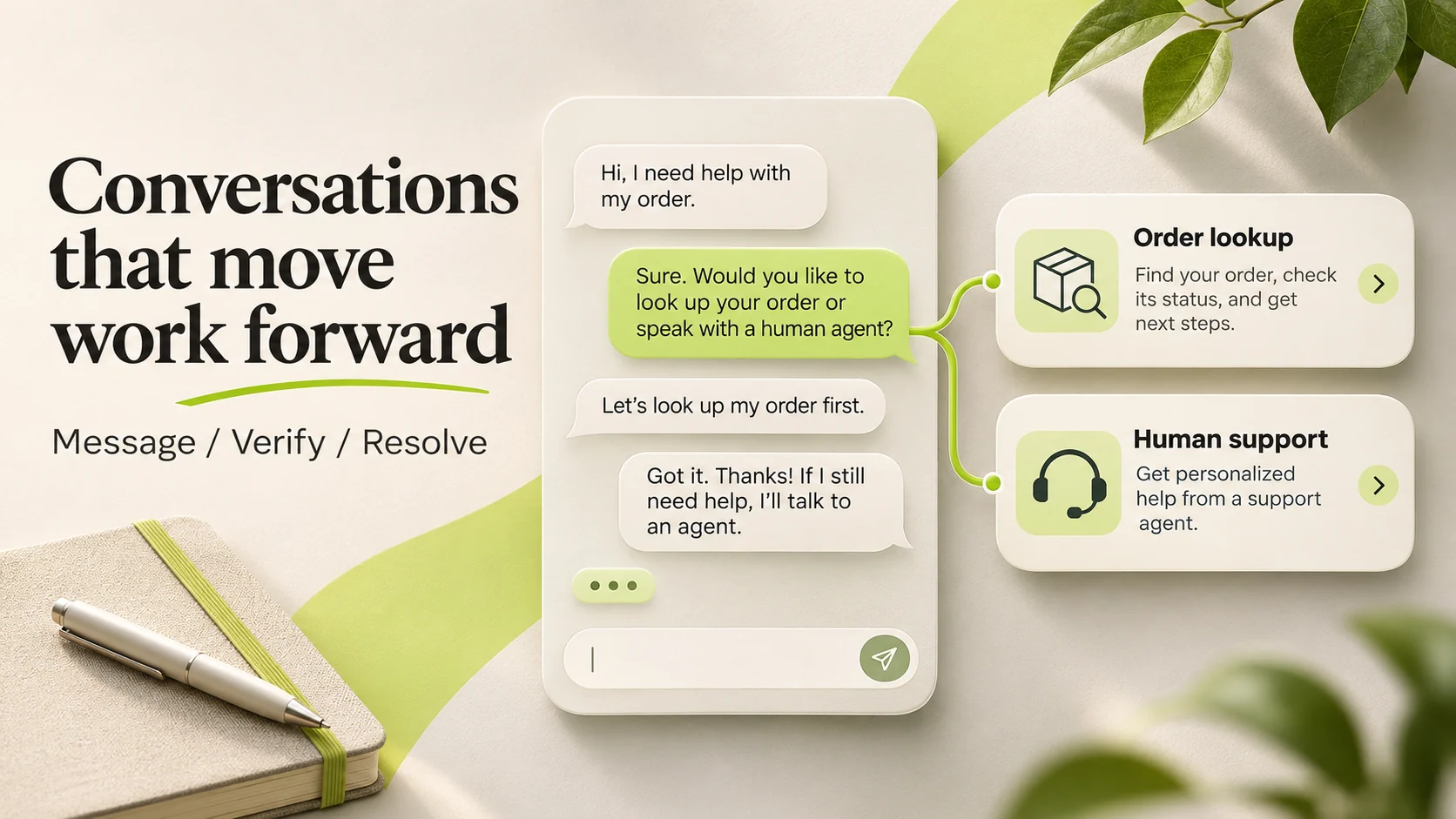
A WhatsApp assistant becomes useful when it can answer a customer's question from reliable business records and hand over when it cannot. A conversational interface alone does not make order data current or give the assistant authority to change a booking.
Start with the existing service process and a small set of permitted actions. Order lookup, appointment information and collecting missing details are different tasks from issuing refunds or changing account ownership. Define each boundary before connecting a model.
Design around the channel's rules
WhatsApp's Business Messaging Policy distinguishes the customer service window from messages that require approved templates. The policy permits replies without a template within the 24-hour window following a user's message and requires approved templates outside that window. It also requires clear escalation paths when automation is used.
Verify the current policy, business permissions and account configuration before implementation. A successful incoming conversation does not authorise unrestricted future marketing. Keep messaging permission and privacy requirements visible in the operating design.
Connect identity to the right records
A phone number or a supplied order reference may not be enough to disclose sensitive account details. Use the business's approved verification process and return only the information needed for the task. Do not request full payment-card or sensitive identity details through a conversational flow.
Maintain a link between the conversation, customer record and service case. If a person changes channels, the next support agent should receive a useful summary and the unresolved question, with access controls preserved.
Example: checking an order and requesting a change
Illustrative scenario: a customer asks where a parcel is, then asks to change the delivery address. The assistant can report the verified tracking state. Address changes require a separate check of fulfilment status, customer authority and carrier capability. Do not promise a change simply because the conversation sounds straightforward.
If the request needs a person, hand over the order reference, latest known state, customer request and any failed checks. Make the handoff visible to the customer. Avoid leaving them in a loop where every request to speak to someone triggers another automated answer.
Keep the workflow dependable
- Use stable message and operation identifiers to avoid duplicate work.
- Record whether a reply was prepared, sent or confirmed by the provider.
- Handle expired credentials and provider errors explicitly.
- Pause automated actions when required data is stale or unavailable.
- Provide an operator route to resume or close a case.
Test the system with incomplete messages, repeated questions, unsupported languages and requests outside its scope. An assistant should say what it can verify, not fabricate a delivery date or policy exception to sound helpful.
Measure service outcomes
Review resolved cases, repeat contacts, escalations, incorrect actions and customer effort. A shorter conversation is not automatically better if the customer gives up. Separate genuine resolution from a conversation that simply stopped receiving messages.
Common questions
Can a normal website chatbot be copied into WhatsApp?
Its knowledge may be reusable, but channel permissions, identity, messaging rules and handoff behaviour need their own implementation checks.
Can AI approve refunds in chat?
Only a separately authorised financial workflow should execute refunds. The chat interface must not bypass its controls.
Must every reply use AI?
No. Fixed, accurate status messages and structured forms can be preferable for predictable tasks.
Sources and further reading
Continue with customer support handoffs, AI versus traditional automation.
Discuss your workflow
HINTX helps businesses connect practical operating needs with AI automation and software engineering. Explore our related service, or describe your current process and the problem you want to solve. A useful first discussion starts with your systems, constraints and intended outcome.
Research checked 24 November 2026. Examples are illustrative unless explicitly identified otherwise. Product capabilities and terms can change. The cover is an AI-generated editorial illustration, not a client screenshot or measured result.


Login to comment
To post a comment, you must be logged in. Please login. Login
Comments (0)