
AI, Automation & Software
4 min read
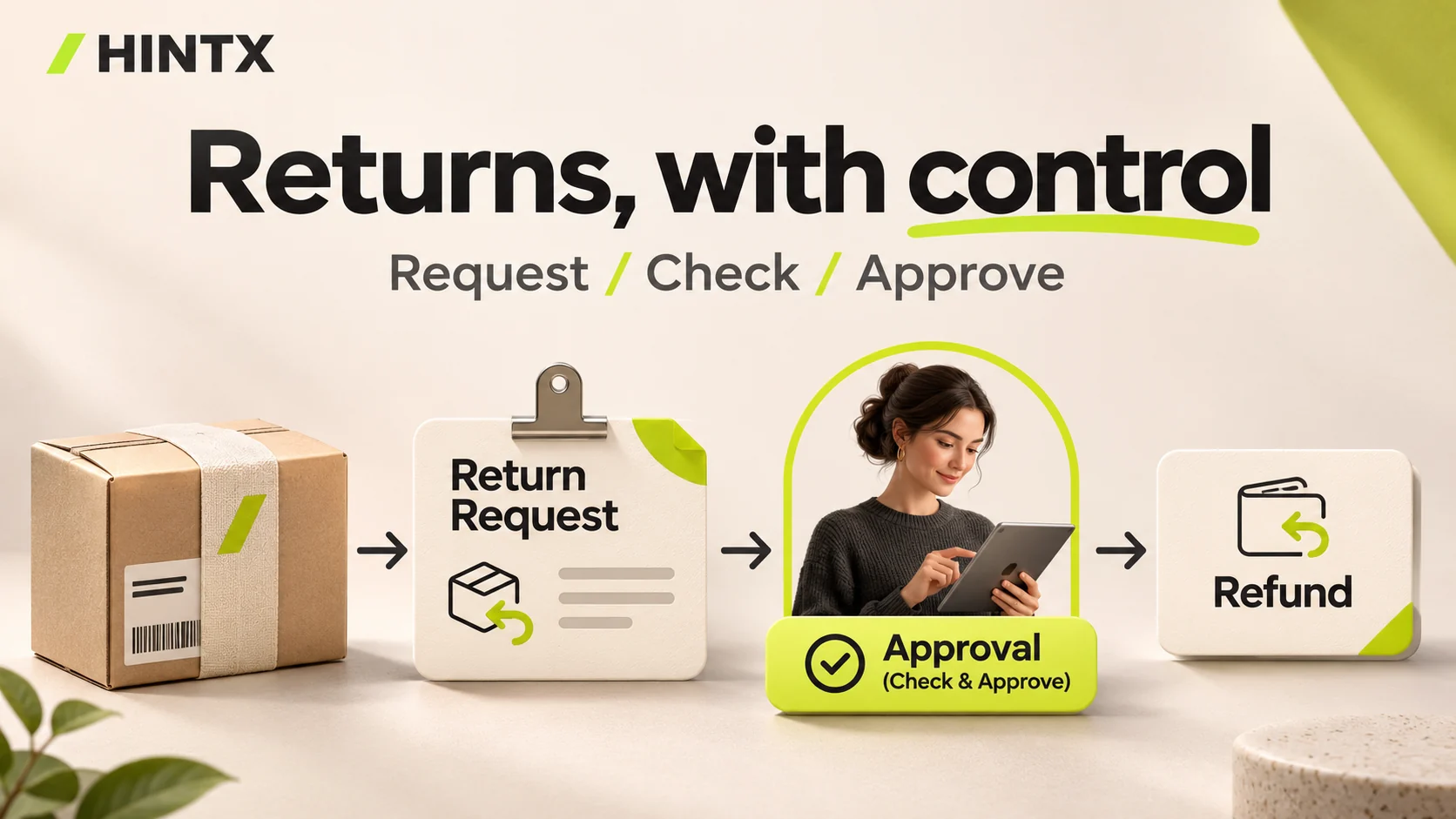
AI can help a returns team understand a request, collect missing details and explain the next step. It should not turn a customer's persuasive message into authority to issue a refund. Treat conversation, return eligibility, parcel movement and payment as separate responsibilities.
A useful returns workflow reduces repetitive clarification while preserving the merchant's policy and financial controls. Before choosing a model, map the decisions staff currently make and the evidence each decision needs.
Separate the states of a return
Shopify's returns documentation distinguishes activities including eligibility, approval, return tracking, restocking, exchanges and refunds. An integration should preserve those distinctions rather than treating a return request as a completed financial outcome.
- Verify the customer and relevant order.
- Identify the fulfilled items and the customer's requested outcome.
- Check the applicable policy and record unresolved exceptions.
- Create the authorised return workflow and provide the correct instructions.
- Track receipt and inspection separately from customer messages.
- Present any refund or exchange decision to the authorised role.
Give AI a bounded role
Language models can summarise a long complaint, classify the stated reason or draft an explanation from approved policy text. Structured business rules should determine whether required facts are present. Payment authority belongs to the transaction system and its permissions, not to a prompt saying “be careful”.
Keep the policy version used for a decision. If a customer bought under an earlier policy, staff need enough context to apply the appropriate terms. Do not let a model invent a deadline, promise free return shipping or claim an exception has been approved.
Example: a partial return with a delivery dispute
Illustrative scenario: a customer wants to return one item from a multi-item order and says another never arrived. The assistant should open the return request for the identified item and route the delivery dispute separately. It should not refund the whole order or merge the two issues into a generic “return completed” message.
The review screen should show the order, item, quantity, reason, policy evidence and proposed action. If staff amend the quantity or refund amount, any earlier approval should no longer authorise the changed transaction. After execution, store the payment provider's result before announcing completion.
Plan for incomplete and repeated events
A courier event may arrive late, a customer may submit the same request twice, or an API call may time out after the action succeeded. Use stable return and operation identifiers. Query the existing outcome before retrying a financial action. Show an explicit pending state when the result is unknown.
Test damaged-item claims, missing order references, already-refunded items, split shipments and failed notifications. Keep a route for staff to take over with the complete case history. A customer should not need to repeat the entire story after escalation.
Measure the work rather than the bot's confidence
Track clarification rounds, time waiting for review, duplicate requests, reopened cases and incorrect actions. Compare like-for-like return types. A reduction in messages alone could mean customers cannot reach help; it is not sufficient evidence of a better service.
Common questions
Can simple returns be automated completely?
Some merchants can automate tightly defined, low-risk steps. The scope depends on their policies, systems and authority model. Financial execution needs separately approved controls.
Does a return approval mean a refund has happened?
No. Show the actual state and distinguish return authorisation from money movement.
What should a first pilot cover?
Choose one return type with clear rules and reliable order data. Keep exceptions visible and expand only after reviewing real outcomes.
Sources and further reading
Continue with customer support with human handoffs, AI tool permission controls.
Discuss your workflow
HINTX helps businesses connect practical operating needs with AI automation and software engineering. Explore our related service, or describe your current process and the problem you want to solve. A useful first discussion starts with your systems, constraints and intended outcome.
Research checked 24 November 2026. Examples are illustrative unless explicitly identified otherwise. Product capabilities and terms can change. The cover is an AI-generated editorial illustration, not a client screenshot or measured result.



Login to comment
To post a comment, you must be logged in. Please login. Login
Comments (0)