
AI, Automation & Software
4 min read
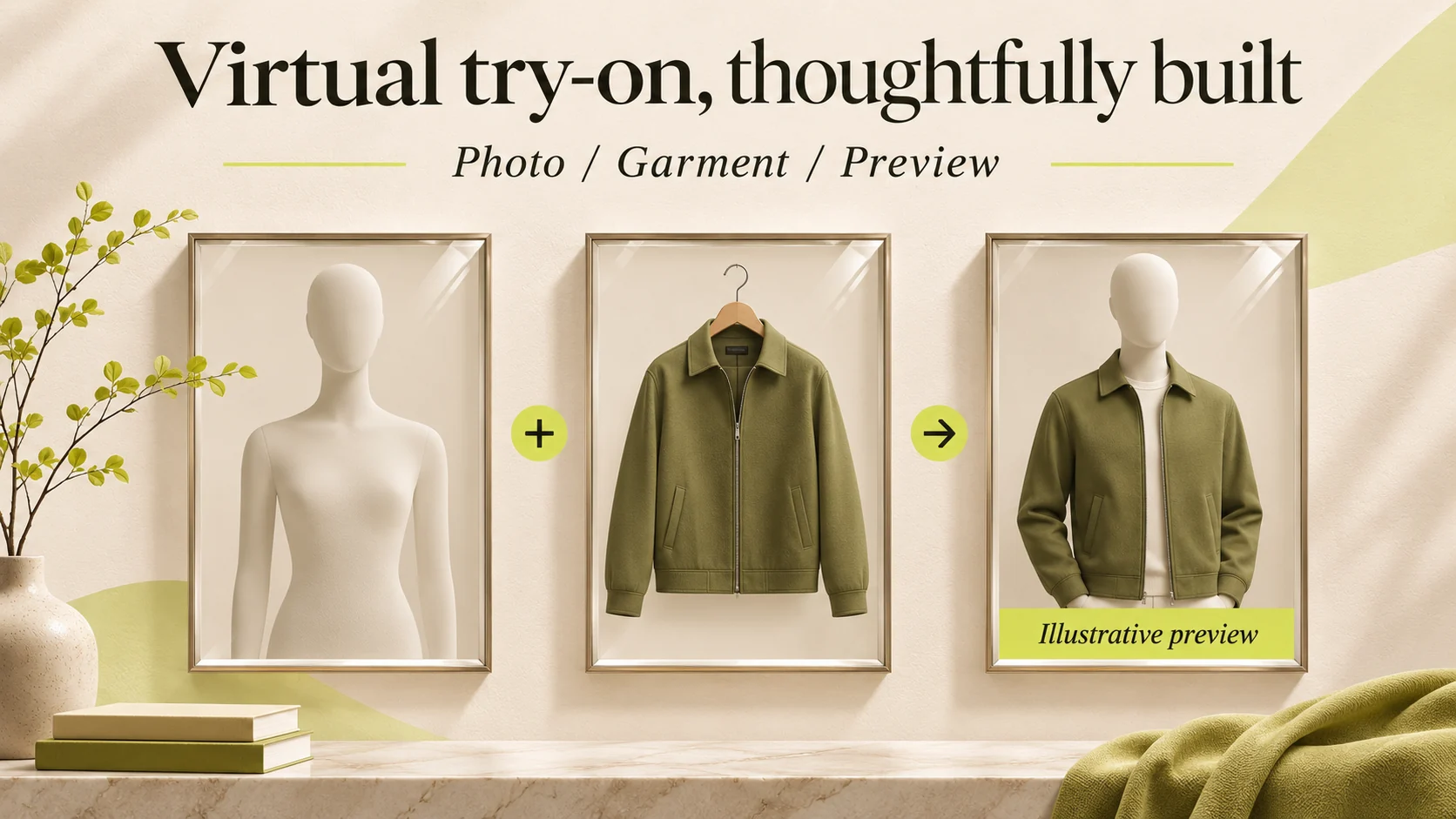
AI virtual try-on can help a shopper visualise a garment using an uploaded image. A useful integration needs more than an image-generation call: it needs suitable product inputs, a clear customer journey, controlled handling of uploads and an honest explanation of what the result represents.
Google's Virtual Try-On documentation describes generating a try-on image from a person image and product photos. That capability is a visualisation tool. It is not evidence that a garment will fit, feel or behave exactly as shown.
Define the experience before selecting a model
Decide which product categories and image types the feature supports. Show customers concise upload guidance and explain why a photo may be rejected. Keep product selection explicit so the generated preview remains linked to the intended item and variant.
Separate size advice from appearance preview. If the business provides measurements or a size chart, preserve those as independent information. Do not let the generated image become an unsupported sizing recommendation.
Design a complete processing journey
- The shopper selects a supported product.
- The site explains upload handling and obtains the required permission.
- The upload is validated and assigned a private processing reference.
- The service receives only the necessary inputs.
- The interface displays a pending, completed or failed state.
- The shopper can return to the product without losing context.
Set limits on file types, size and supported content. Keep uploads out of publicly browsable directories. Decide how long inputs and results are retained and implement that decision; do not assume a provider's default matches the merchant's policy.
Example: a preview that should be rejected
Illustrative scenario: a shopper uploads a low-resolution photo with the garment area obscured. The generated result changes the jacket's fastening and invents a pocket. A polished image is still an inaccurate product representation. The experience should let the shopper retry and should avoid presenting the result as a faithful photograph.
Review outputs across varied poses, lighting, body presentations and product styles. Look for altered patterns, missing details and identity changes. Record supported and unsupported conditions rather than using one attractive example as proof of general reliability.
Performance is part of the product
Measure actual processing time from upload through display, including queueing and network delay. Use a progress state that remains useful when processing takes longer than expected. Do not promise a universal completion time based on the fastest demonstration.
Prevent repeated clicks from creating duplicate paid jobs. Provide a safe retry after a confirmed failure and a way to recover an existing result after navigation. Keep costs bounded per session and distinguish provider errors from invalid customer inputs.
Evaluate commercial usefulness honestly
Track feature use, completion, retries and customer feedback before making claims about conversion or returns. Any sales comparison needs a suitable measurement design. A generated preview alone does not prove business uplift.
Common questions
Does virtual try-on replace fitting information?
No. Keep measurements, material details and return terms accessible alongside the visualisation.
Can we reuse uploaded photos for marketing?
That is a separate permission and policy question. Do not infer it from permission to generate a private preview.
Should every fashion item be enabled immediately?
No. Start with supported categories and expand after reviewing output quality and customer experience.
Sources and further reading
Continue with shopping-assistant store readiness, AI acceptance testing.
Discuss your workflow
HINTX helps businesses connect practical operating needs with AI automation and software engineering. Explore our related service, or describe your current process and the problem you want to solve. A useful first discussion starts with your systems, constraints and intended outcome.
Research checked 24 November 2026. Examples are illustrative unless explicitly identified otherwise. Product capabilities and terms can change. The cover is an AI-generated editorial illustration, not a client screenshot or measured result.

Login to comment
To post a comment, you must be logged in. Please login. Login
Comments (0)